Julien Boutet is an experienced Chemist with more than 15 years’ experience in R&D mainly as R&D manager and Project manager in different areas: chemistry, biocatalysis and biotechnology processes ; mainly for process scale-up from laboratory to industrial scale.
He holds a Ph.D. in Glyco-chemistry at Institut Pasteur from Paris Descartes University. From 2008 to 2013, he served as project manager for the scale-up of HMOs (Human Milk Oligosaccharides) at Glycom A/S then joined Adisseo, world leaders in animal nutrition, to set-up a R&D center in France and then in China. In 2019, he joined Seqens and became Innovation Director to promote transversality, cross-fertilization, ideas generation from their generation to business opportunities (technologies and products). Recently he became Biotechnologies Director at Seqens, leading a team of 25+ people with management of two entities Protéus and Alganelle. One of the key missions is to become a PRDO (Partnerships Research and Development Organization) with a dual model: R&D services and new products development thanks to co-development model.
Inventor/author of over 30 patents and 15 publications
https://www.linkedin.com/in/julien-boutet-5a25a742/?locale=en_US
ANTHONY BRESIN
Founder of AnBreiL
Anthony Bresin has more than 25 years of experience in the industrial biotechnology field, with expertise spanning fermentation, purification, and process scale-up from laboratory to industrial manufacturing.
He holds a Ph.D. in Industrial Fermentation on hyaluronic acid production from Reims Champagne-Ardenne University (France).
From 2000 to 2018, he served at ARD (Agro-Industrie Recherches et Développements, France), where he successively held scientific and managerial positions, ultimately as Chief Scientific Officer and Head of R&D. During this period, he led programs in fermentation, fractionation, and biopolymer development, contributing to the creation and industrialization of new bio-based molecules and polymers.
He then joined HTL (2018–2023) as Chief R&D and Validation Officer, overseeing R&D programs and technology transfers focused on biopolymers such as hyaluronic acid.
Since 2023, he has been leading AnBreiL, a biotechnology advisory firm providing scientific and strategic support in R&D, process development, and scale-up for companies active in biopolymers and fermentation-derived products.
Professor François Coutte is a professor of microbiology and molecular biology at the University of Lille, France. He obtained his PhD in biotechnology and was accredited to supervise research at the University of Lille in 2009 and 2019, respectively. Since 2010, Professor Coutte has been conducting research on the production of secondary metabolites of microbial origin at UMRt INRAE 1158 BioEcoAgro. He specialises in microbial culture processes for the production of metabolites of interest. His research focuses mainly on lipopeptides derived from Bacillus and Pseudomonas, and in particular on the various genetic, metabolic and bioprocess engineering strategies that enable their overproduction and the development of their applications. Thanks to this research, he has participated in numerous collaborative research projects at European level (H2020, INTERREG, BBI). He has also promoted and transferred part of this work to an industrial scale through the creation of the company Lipofabrik. He is currently co-director of the VALOREEMA industrial chair, which focuses on the valorisation of agricultural resources through extraction, biocatalysis or fermentation.
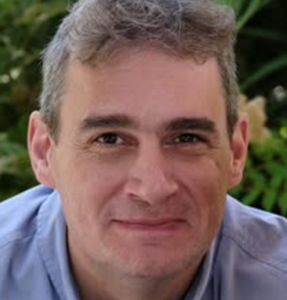
Frank is a professor of bioengineering at Gembloux Agro-Bio Tech, a position he has held since 2015. His academic journey began with a PhD in bioprocess scale-up/down, where he developed stochastic models to predict the microenvironment encountered by cells in large-scale bioreactors. Following his PhD, he conducted postdoctoral research at INSA Toulouse in France, focusing on the characterization of cell population dynamics and diversification (phenotypic and genotypic). Recently, this research led to the discovery of the Fitness-Entropy compensation rule, a fundamental principle that can be applied to various cellular systems to predict the mechanisms and intensity of phenotypic diversification, as well as its impact on cellular entropy. Frank’s research expertise is complemented by his teaching responsibilities, which include courses on mathematical modeling of dynamic systems, systems and synthetic biology, bioprocess engineering, and more applied topics such as project-based courses on the production of valuable compounds by microbes, bioreactor operations in the lab and single-cell analyses.
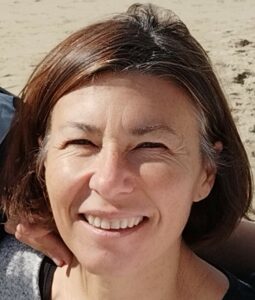
Nathalie Gorret is an INRAE Research Scientist at Toulouse Biotechnology Institute (TBI UMR CNRS INSA 5504 INRAe 792) since 2007. For 18 years, she developed her research within the Group Fermentation Advances and Microbial Engineering (FAME) and recently joined and co-leads the group PHYGE (Physiologie intégrée et génomique fonctionnelle des systèmes microbiens et des champignons filamenteux). Her pHD followed by a 3 years post-doctorate at MIT (Massachusetts Institute of Technology, Cambridge, USA) in Pr Sinskey’Lab (Biology Department) have contributed to developing expertise in Microbial Physiology and Biochemical Engineering, working with bacteria, yeast and plant cells for various biotechnology applications.
She joined Toulouse Biotechnology Institute in 2005 as a post-doctoral fellow to investigate the dynamics of the interaction between biological and physical phenomena observed in large-scale bioreactor. Since then, her researches focus on the understanding of the impact of heterogeneities (substrates/products/pH/dissolved oxygen/sub-populations) on the microbial behavior and strain robustness at both population and sub-population levels (physiological states / morphological states / genetic stability) using Wild Type and genetically modified strains in order to optimize microbial processes. She developed skills on methodologies and tools to characterize and quantify the transient microbial responses to environmental stresses using offline and online biosensors at both global population and single-cell levels. In addition, she develops projects focusing more specifically on biochemical engineering and the development and optimization of bioprocesses, implementing unconventional microorganisms (extremophile microorganism for example) or for specific bioproductions such as Single Cell Proteins (SCP) and lipids.
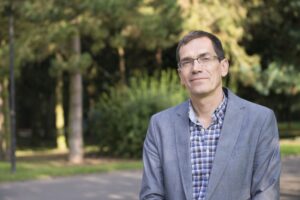
Philippe Jacques is Professor of Microbiology and Applied Microbiology at Gembloux Agro-Bio Tech/University of Liège. He currently serves as President of the “Terra Teaching and Research Center”, the only Research Unit at Gembloux Agro-Bio Tech. He is one of the two founders of the Lipofabrik company. He specializes in the study of secondary metabolites of microbial origin and their development as new biopesticides (180 publications and 8 patents). He is currently coordinator of the Interreg Biocontrol 4.0 European project portfolio (43 partners) and involved as a partner in 3 other European projects (Urbane, Adopt-IPM and SurfUps) linked to the development of biocontrol agents. He is co-coordinator with Dr Jean-Yves Parfait of Multitel of the Strategic Innovation Initiative named Digibiocontrol which aims to develop synergies between the fields of digital technology and biocontrol in agriculture.
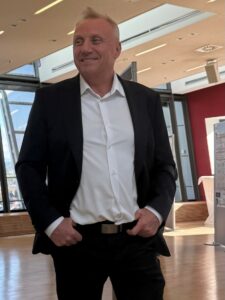
Professor Marcin Łukaszewicz (University of Wrocław/Wrocław University of Economics and Business / InventionBio) is a biotechnologist working at the interface of industrial microbiology, bioprocess engineering and the circular bioeconomy. He obtained his PhD in Applied Natural Sciences at Université catholique de Louvain (Belgium), followed by habilitation in biology, and received the title of full professor in Poland (2019).
His research and innovation activities focus on microbial biosurfactants, particularly lipopeptide biosurfactants, biotransformation and valorisation of agro‑food industry by‑products, and anaerobic digestion/methanogenesis, including the development of resources such as the PhyMet2 toolkit for methanogens https://phymet2.biotech.uwr.edu.pl/?ind=about
In parallel, he is the CEO and co‑founder of InventionBio S.A. www.inventionbio.pl, developing sustainable, waste‑free biorefinery solutions based on ferrmentation with GRAS microorganisms with applications across cosmetics, animal nutrition and biofertilisers. He is also interested in continuous, cost‑efficient biosurfactant production, closed‑loop media utilisation, and applying the EFQM Excellence Model to R&D project management to increase project success rates.
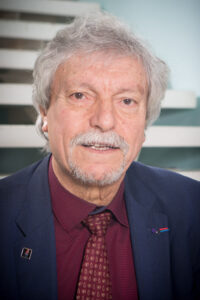
Pierre Monsan (76) is Scientific Advisor in the field of Biocatalysis, Industrial Biotechnology and Bioproduction.
He is Professor Emeritus at the National Institute for Applied Sciences (INSA) of the University of Toulouse, France, and was Professor at Ecole des Mines of Paris (1993-2016). He was elected member of the French University Institute (IUF) in 2003 and re-elected in 2008.
He was CEO-CSO of Cell-Easy (2019/7-2023/12), a CDMO start-up company based in Toulouse and dedicated to the large scale production of affordable and high quality cells for clinical trials in the field of Biotherapy: MSC, NK, CAR-NK, CAR-T.
He is Founding Director of the pre-industrial demonstrator “Toulouse White Biotechnology (TWB)”, which was granted M€ 20 within the frame of the French National Program “Investissement d’avenir” in March 2011 (www.toulouse-white-biotechnology.com), presently hosting 150 people within the frame of a public/private consortium involving 50 companies.
He has been active for 44 years in the field of enzyme catalysis (enzyme production, purification, immobilization and application, screening, structural characterization and molecular design). He authored more than 250 scientific publications, 3 books and 65 patents. His H-factor is 54.
He was involved in the founding of several start-up companies: BioEurope (1984, now Solabia Group), BioTrade (1996), Genibio (1998, now Pileje Group) and in the move of LibraGen (now Givaudan Active Beauty) from Lyon to Toulouse (2004).
He developed several original industrial production processes (Malyl-Tyrosine, Fucogel®, Rhamnogel®, DiHydroxyAcetone, Hyaluronic Acid,…), leading to a global annual turn-over above €60m.
He is member of the Board and the Scientific Advisory Board of several companies.
He is founding member of the French Academy of Technology, member of the French National Academy of Agriculture, member of several Scientific Societies and member of the College of Fellows of the American Institute for Medical and Biological Engineering (AIMBE). He is founder and Honorary Chairman of the French Federation of Biotechnology (FFBiotech), ex-member of the Executive Board of the European Federation of Biotechnology (EFB), and Doctor Honoris Causa of the University of Liege, Belgium, and of Plovdiv, Bulgaria.
He received in 2000 the Chaptal Award for Chemical Arts from the French Society for the Promotion of the National Industry, in 2012 the Biocat Award for Life Achievement from the University of Hamburg, and in 2017 the Enzyme Engineering Award from Engineering Conferences International.
He is Officer of the Academic Palms, Knight of the French National Order of Meritus and of the National Order of “Legion d’Honneur”.
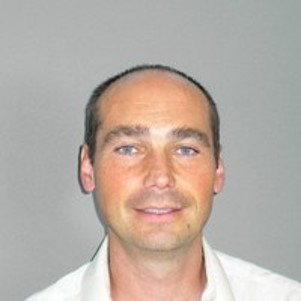
Since February 2026 Managing Director of HJD Process, Végétal Techno (Braine, 02)
- Industrial subcontracting in the field of powders and liquids
2018-2026 Head of Operations Strategy (Givaudan Group, Fragrance and Beauty Division)
- Head of the « Global Manufacturing Footprint » for Givaudan Active Beauty (5-year budget > €30 million)
- Head of industrial scale-ups from R&D to production (8 people)
- Head of strategic subcontracting for Givaudan AB (Beauty Division) (4 people)
- Head of industrial projects for major accounts and industrialization of 25 projects
- Member of the management and operations committee of FUSAC, participating in the acquisition of 5 companies, etc.
2014-2018 Director of Operations (Givaudan AB Group, Pomacle, 51)
- Head of the industrial sites in Pomacle (145 French employees), Ile Grande (6 French employees), and Volketswil (30 employees, Switzerland).
- Responsible for an industrial investment to increase fermentation and purification production capacity (€12.5 million in 2015)
- Transition of the 3 sites to the ERP-SAP system, including reorganizations and the implementation of the merger
- Implementation of a GMP cosmetic quality system according to the EFfCI standard
- Member of the Givaudan management committee (Beauty Division) and participation in due diligence for the acquisitions of Induchem (Switzerland), then Naturex (France), Indena (Italy business unit), and stakes in B Kolor, Alderys, etc.
2000-2014 DEPUTY GENERAL MANAGER AND HEAD OF INNOVATION, POMACLE plant, Bazancourt (51), 85 employees
- Head of strategic marketing, innovation, and CSR (2007), increased sales of new products launched by over 30% in 5 years, participated in the strategic plan. • Presenting new products to key accounts and developing specific projects (L’Oréal, LVMH, Estée Lauder, Clarins, Unilever, etc.)
- Key Account Manager for L’Oréal (2009-2011) with a 30% increase in revenue over the period
- Production and R&D supervision (2005), IFG SME training (18 months)
- Participation in the company’s strategic plan (2004) and acquisition of Acorane/Somaig (€1 million in revenue)
- Defining investment needs to double production capacity (€2 million, 2003)
- Participation in the acquisition of Laboratoires Bomann (€2 million in revenue).
- Revenue growth from €2.8 million to €20.6 million over the period. • Co-authors of several patents for innovative applications and processes
1997-2000 TECHNICAL DIRECTOR (Soliance)
- Supervision and management of the sales and distribution team (global market 1998-2000)
- Implementation of a quality system (HACCP then ISO)
- Optimization of production facilities, implementation of dedicated lines and 5×8 shift teams.
- Optimization of the organic crystallization of DHA (publications)
- Increase in revenue from €1.7 million to €2.8 million during this period
1994 HEAD OF INDUSTRIAL MANAGEMENT (A.R.D)
- Responsible for managing a team of 6 people for industrial development projects in the agri-food, functional nutrients, and cosmetics sectors.
- Establishment of a demonstration unit (feasibility of the industrial production of non-digestible sugars (pentoses) for the synthesis of surfactants).
- Creation of a contract manufacturing services business. Turnover: €0.5 million.
1992 Research and Development Engineer (A.R.D.)
- Development of a process for extracting C5/C6 sugars from wheat bran and sugar beets (Participation in patent drafting).
- Development of a process for extracting beta-carotene from carrots.
- Development of a process for manufacturing galacturonic acid from sugar beet pulp.
1991 Research Engineer (A.R.D.): 6 months
- Varietal selection of sugar beets based on galacturonic acid content.
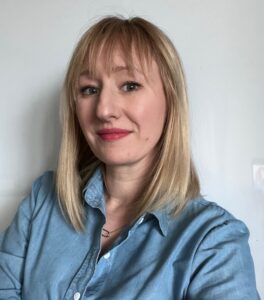
Elodie Wattez is specialized in development of new dairy bioactives for animal and human healthcare. After obtaining her master degree of Nutrition and Food Science from Agrosup Rennes, she joined Ingredia RD teams 10 years ago. Nowdays she is Managing and responsible for the INGREDIA’ RD team of the milk cracking and the fermentation for bioactive solutions.
Thanks to a strong network and cooperation with academic struture and/or industrial partner, the team applies the new knowledges from bioactive peptides in order to develop new health ingredients.
The team activities focus on enzymes and/ fermentation processes to produce molecules of interest from lab scale format to industrial scale up in addition to the proof of efficiency towards clinical studies.